Active Roof Damage? 253-354-8081
Serving Tacoma, Seattle & the Puget Sound
253-354-8081
Storm & Repairs•6 min read•Aug 20, 2026

Ice Dams in Western Washington: How to Prevent Winter Roof Leaks

P
PAC Roofing LLC
Lead Field Inspectors
Ice Dams in Western Washington: How to Prevent Winter Roof Leaks
The Short Answer

Ice dams form when warm air escapes from the attic, melts snow on the upper roof, and that meltwater refreezes at the colder eaves — building a dam that pools water behind it and forces it under the shingles. In Western Washington's occasional cold snaps, the fix is not heat cables. It's balanced attic ventilation, proper insulation to keep heat out of the attic, and ice-and-water shield at the eaves to seal the vulnerable edge. A roof replacement is the right time to install all three.

Warm attic
Root cause of ice dam formation
Eaves
Where meltwater refreezes into a dam
2 ft+
Ice-and-water shield coverage past exterior wall
Not cables
Heat cables treat symptoms, not the cause
Key Takeaways for Homeowners
  • Ice dams form when a warm attic melts snow that refreezes at the cold eaves — the root cause is a warm attic, not a cold roof.
  • Heat cables treat the symptom; the permanent fix is ventilation, insulation, and ice-and-water shield at the eaves.
  • A roof replacement is the best time to install all three defenses, since the deck is exposed.

How an Ice Dam Actually Forms

An ice dam is a symptom of a warm attic, not a cold roof. Here's the chain of events during a Western Washington cold snap:

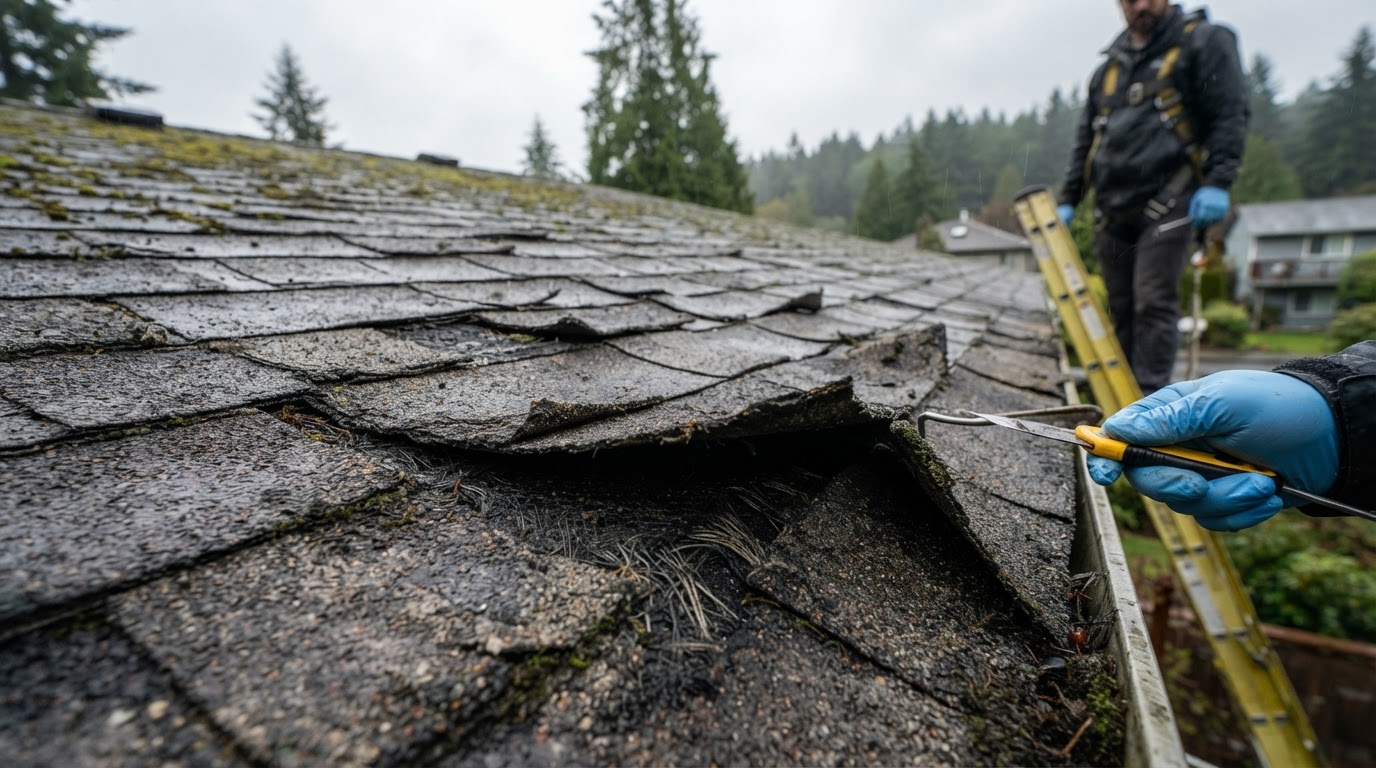
Warm air leaks from the living space into the attic, warming the underside of the roof deck. Snow on the upper, warmer part of the roof melts. That meltwater runs down the slope toward the eaves — which extend past the exterior wall and stay cold because there's no warm attic beneath them. The water refreezes at the eave, building an ice dam that pools water behind it. That pooled water has nowhere to go but up under the shingles, and into your home.

Why Heat Cables Aren't the Answer

Electric heat cables along the eaves are a common band-aid, but they treat the symptom, not the cause. They melt channels through the ice dam, but the dam keeps reforming as long as the attic stays warm. They also add electricity cost, can create fire hazards if installed poorly, and do nothing to stop the water already pooling behind the dam.

The real fix addresses why the attic is warm in the first place.

The Three-Part Permanent Fix

Preventing ice dams means keeping the attic cold so snow melts evenly or not at all, plus sealing the eaves against any water that does back up:

  • Balanced attic ventilation — soffit intake and ridge exhaust create continuous airflow that keeps the deck cold and flushes out warm air.
  • Proper insulation — enough attic insulation (and air sealing of penetrations) keeps heat from the living space out of the attic in the first place.
  • Ice-and-water shield at the eaves — a self-adhering membrane installed at least 2 feet past the exterior wall seals the eave so any backed-up water can't reach the deck.

The Best Time to Address Ice Dams

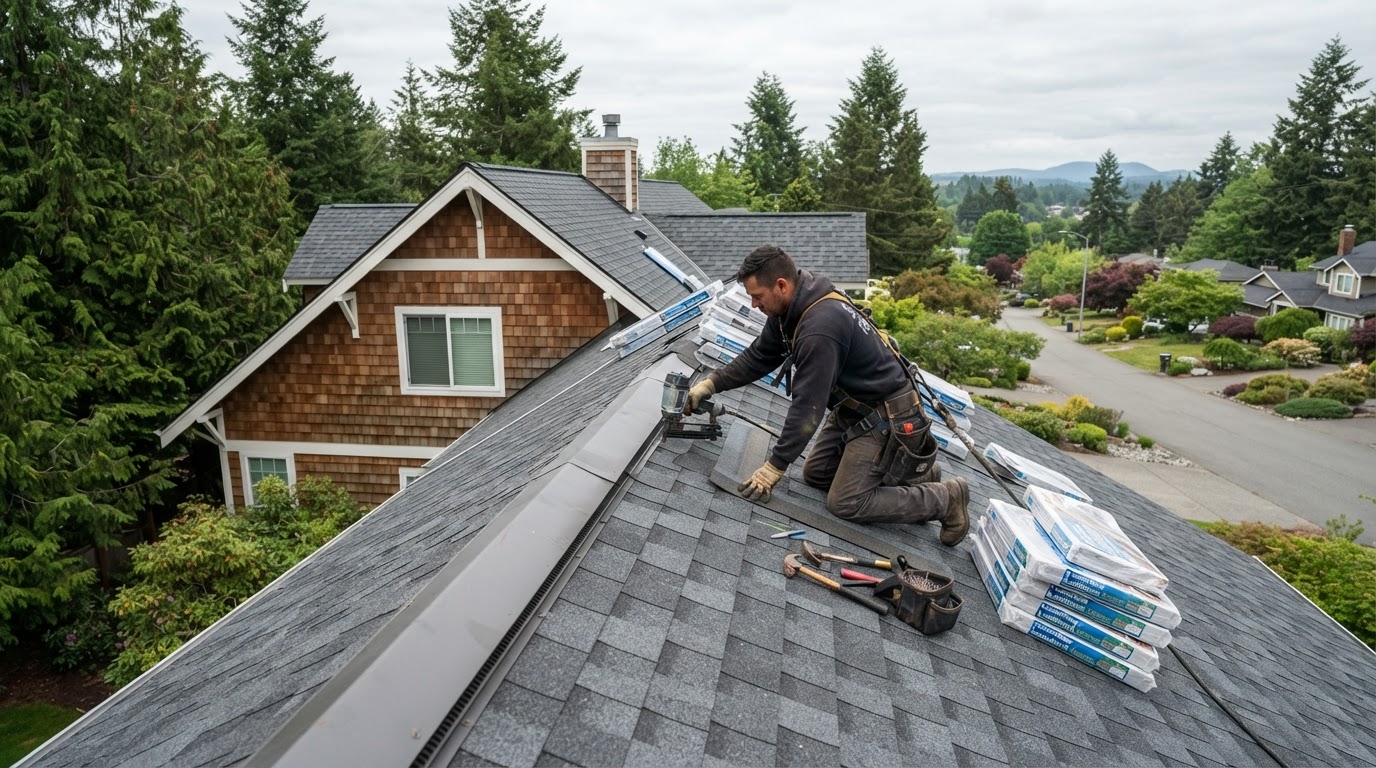
All three fixes are easiest to install during a roof replacement, when the deck is exposed. Adding ice-and-water shield to an existing roof requires removing the bottom courses of shingles, and upgrading ventilation and insulation can be done anytime but is simplest when the roof is open.

If you're replacing a roof in the Puget Sound, make sure your contractor includes ice-and-water shield at the eaves, valleys, and around penetrations — not just the minimum felt. It's the single most effective defense against ice dam leaks and the wind-driven rain that causes most of our leaks.
Frequently Asked Questions

What causes ice dams on a roof in the Pacific Northwest?

Ice dams form when warm air escapes from the living space into the attic, warming the roof deck and melting snow on the upper roof. That meltwater runs down to the colder eaves and refreezes, building a dam that pools water behind it and forces it under the shingles. The root cause is a warm attic, not a cold roof.

Do heat cables prevent ice dams?

Heat cables only treat the symptom, not the cause. They melt channels through an existing dam, but the dam keeps reforming as long as the attic stays warm. They also add electricity cost and fire risk. The permanent fix is balanced attic ventilation, proper insulation, and ice-and-water shield at the eaves.

How do I stop ice dams permanently?

Three steps: add balanced soffit-to-ridge attic ventilation to keep the deck cold, insulate and air-seal the attic to keep heat out, and install ice-and-water shield at least 2 feet past the exterior wall at the eaves. All three are easiest to install during a roof replacement when the deck is exposed.

What is ice-and-water shield and why does it matter in Western Washington?

Ice-and-water shield is a self-adhering waterproof membrane installed at the eaves, valleys, and around penetrations. It seals the most leak-prone edges so backed-up water from ice dams or wind-driven rain can't reach the roof deck. It's the single most effective defense against ice dam leaks and should be included in any Puget Sound roof replacement.

Serving Homeowners Across the Puget Sound

PAC Roofing LLC provides the roofing services described in this guide to homeowners in these Pacific Northwest communities:

Have Questions About Your Roof?

Get straightforward recommendations from local roofing pros.

Schedule a free on-site roof inspection anywhere in Puget Sound.

Call Now253-354-8081