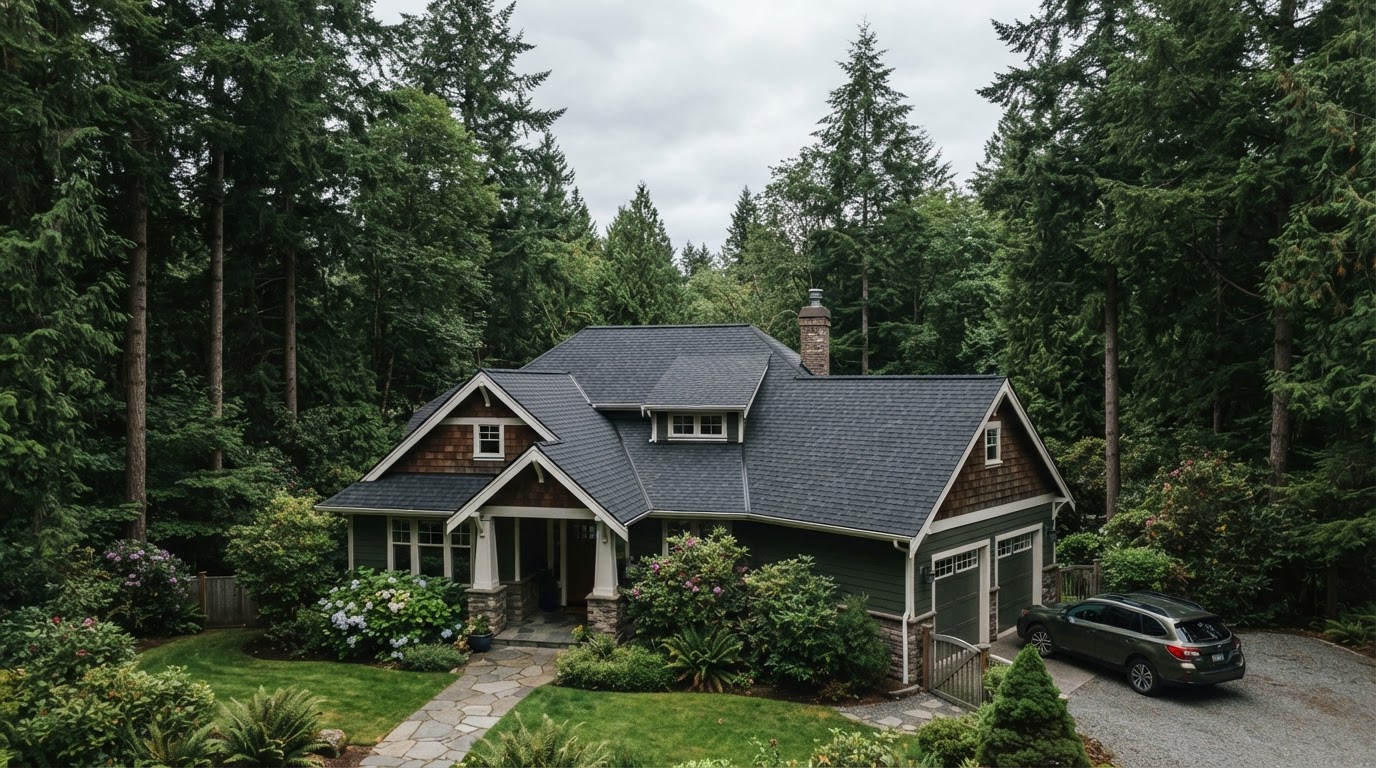
Why Manufacturer Lifespan Numbers Don't Match Washington Weather
When roofing manufacturers advertise '30-year' or 'Lifetime' shingles, those estimates assume moderate rainfall, low humidity, and dry summer heat. In Tacoma, Seattle, and the surrounding Puget Sound, our roofs endure 150+ days of precipitation, maritime humidity, and shade from dense Douglas firs and western red cedars.
The result is a real-world lifespan that runs roughly 20–30% shorter than the sticker number. A '50-year' architectural shingle in Phoenix may genuinely approach that mark; the same product on a shaded Tacoma roof with poor ventilation will often need replacement by year 25.
Shingle Type by Type: Realistic Lifespans in Western Washington
Not all shingles age the same way under Pacific Northwest conditions. Here is what we actually see in the field after three decades of inspections across Pierce, King, Thurston, and Snohomish counties:
- 3-tab asphalt shingles — 15 to 18 years. The thin mat and flat profile hold moisture against the surface, accelerating granule loss and edge curling.
- Architectural (laminated) shingles — 22 to 28 years. The thicker double-layer construction sheds water better and resists wind uplift, making it the dependable sweet spot for Puget Sound homes.
- Designer / luxury shingles — 25 to 30 years. Heavier and more dimensionally stable, but only worth the premium if ventilation and underlayment are upgraded to match.
- Cedar shake — 18 to 25 years with treatment, 12 to 15 years without. Our humidity feeds moss and lichen into the wood fibers faster than in drier climates.
- Metal roofing — 40 to 60+ years. Excellent in Western Washington because it sheds water instantly and moss cannot root into a steel or aluminum surface.
The #1 Lifespan Killer in Puget Sound: Neglected Moss
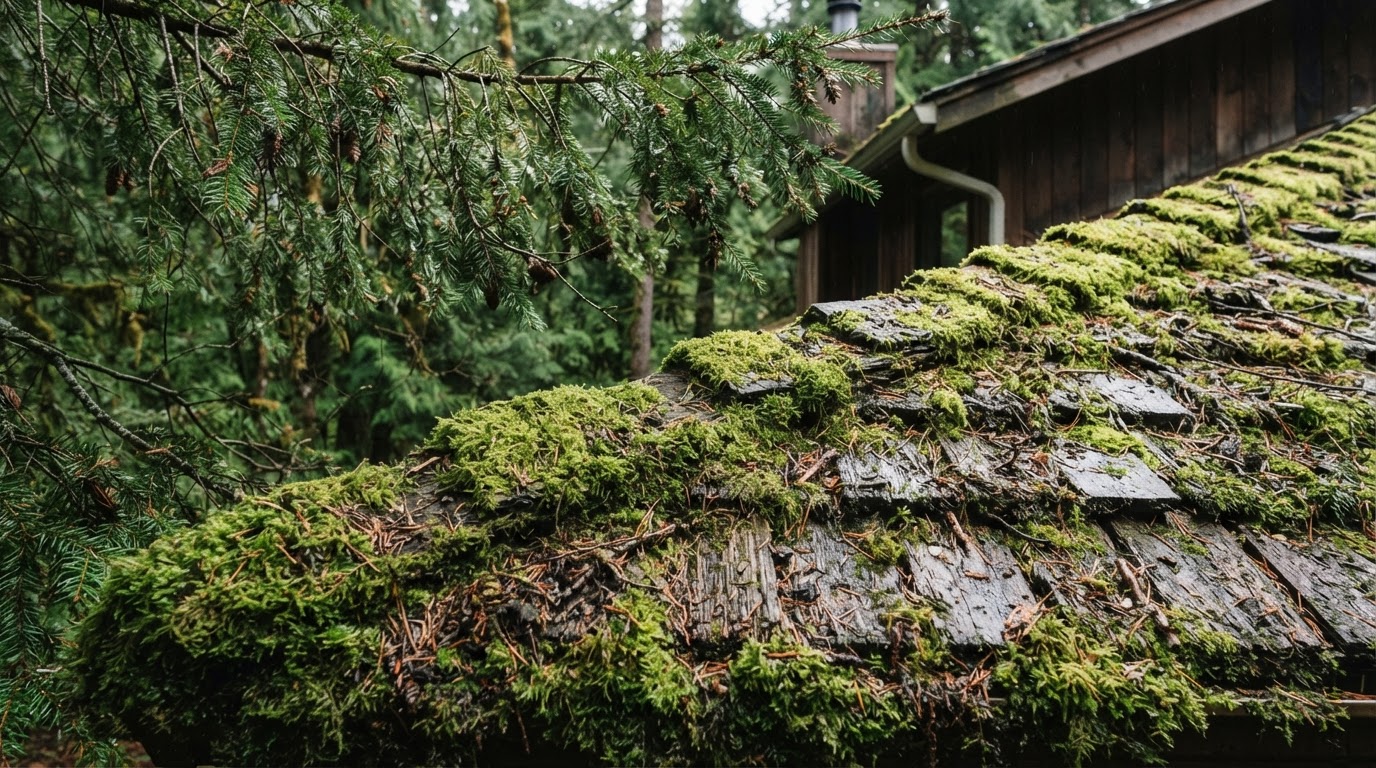
Unlike dry climates where moss burns off in summer, our winter moisture allows root rhizoids to work beneath shingle edges, lifting the adhesive seal strip and funneling driven rain directly against the roof decking.
Once moss establishes, it acts like a sponge. A thick moss cushion holds water against the shingle surface for days after a storm, keeping the asphalt saturated and breaking down the granule-adhesion bond. We routinely measure 30–40% faster deterioration on moss-covered slopes compared to clean ones on the same roof.
The fix is not pressure washing — that strips the protective granules and halves the remaining lifespan in a single afternoon. Gentle soft-wash treatment and routine maintenance every 18–24 months is what actually extends a roof's life.
Ventilation and Underlayment: The Hidden Half of Roof Lifespan
A roof's lifespan is set as much by what's underneath the shingles as by the shingles themselves. In Western Washington, two underlayment decisions matter most:
First, continuous ridge ventilation. Without balanced intake (soffit) and exhaust (ridge) airflow, attic humidity from our wet climate condenses on the underside of the roof deck, rotting the plywood from the inside out. A perfectly good shingle surface can fail early because the deck beneath it has turned soft.
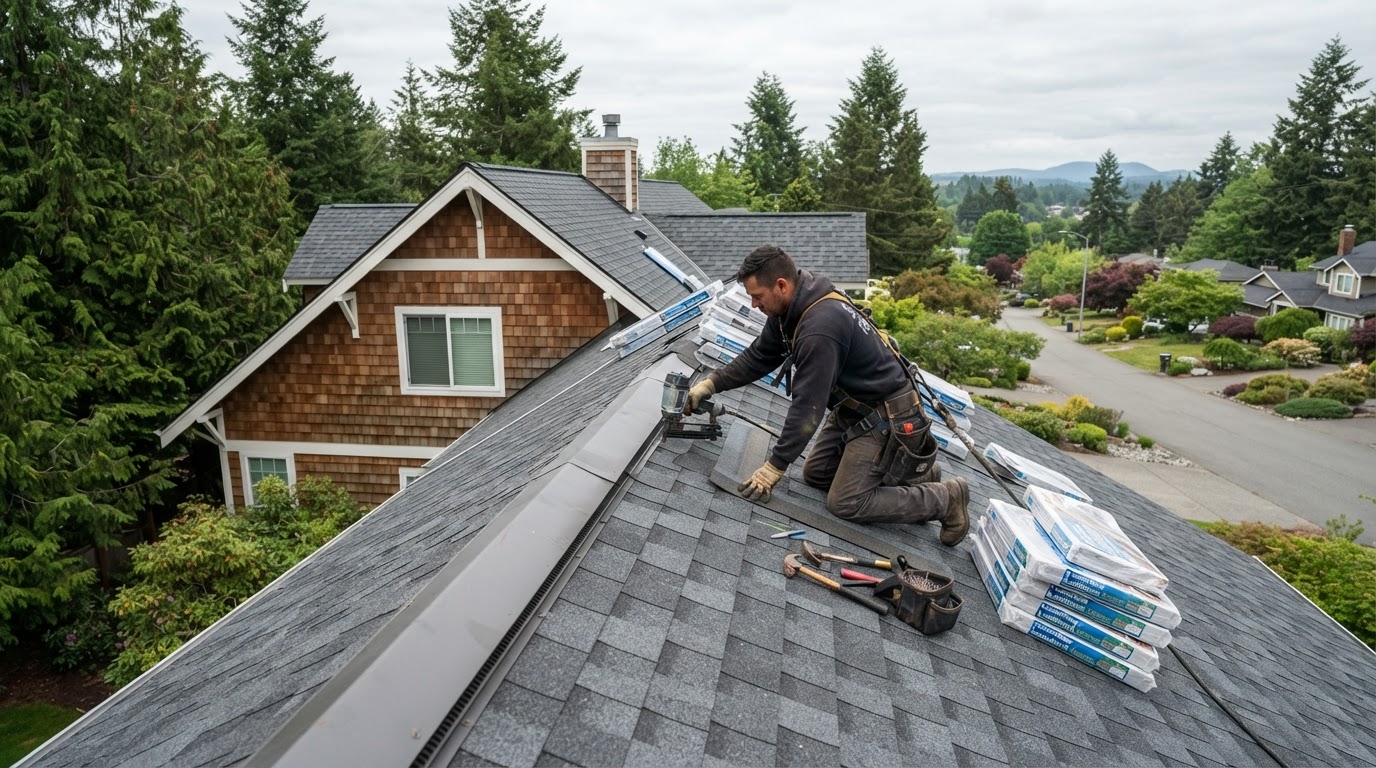
Second, synthetic underlayment. Traditional felt paper absorbs moisture and degrades within a few wet seasons if shingles are delayed or damaged. Synthetic underlayment sheds water, holds up to foot traffic, and gives the shingles a stable, dry surface to bond to.
Signs Your Roof Is Approaching End of Life
If your roof is between 18 and 22 years old, watch for these field indicators we look for during inspections:
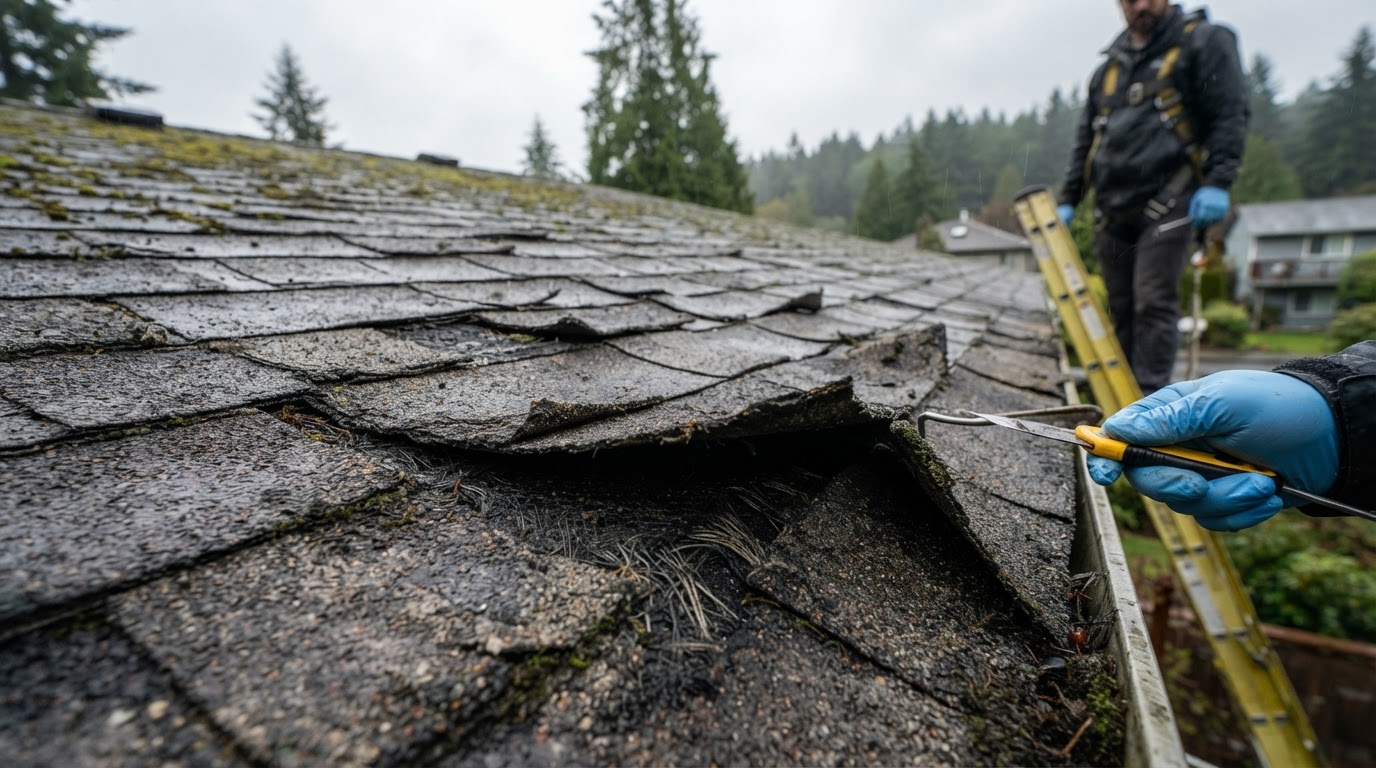
- Shingle edges curling or clawing upward — the asphalt is drying out and losing flexibility.
- Granule wash collecting in gutters and downspout exits — the protective surface coating is shedding.
- Persistent moss or dark algae streaks returning within months of cleaning — the shingle surface is rough enough to hold spores.
- Soft or bouncy spots when walked on — the deck beneath is delaminating from moisture.
- Recurring leaks in the same valley or flashing area — the seal has failed and patches are buying weeks, not years.
Repair vs. Replace: The Honest Math
A common question we hear is whether one more repair can buy a few more years. The honest answer depends on the roof's age and the pattern of failure.
If your roof is under 15 years old and the leak is isolated to a single flashing, pipe boot, or valley, a targeted repair is almost always the right call. If the roof is over 18 years old and you're calling for repairs twice a year, each patch is chasing a system that is failing broadly — the granules are gone, the seal strips are lifting, and the next leak is simply a matter of where the water finds a path first.
In that second scenario, a full replacement with modern synthetic underlayment and balanced ventilation is usually less expensive over a 3–5 year horizon than repeated emergency repairs plus the interior damage from the leaks you didn't catch in time.