Step 1: Safety First
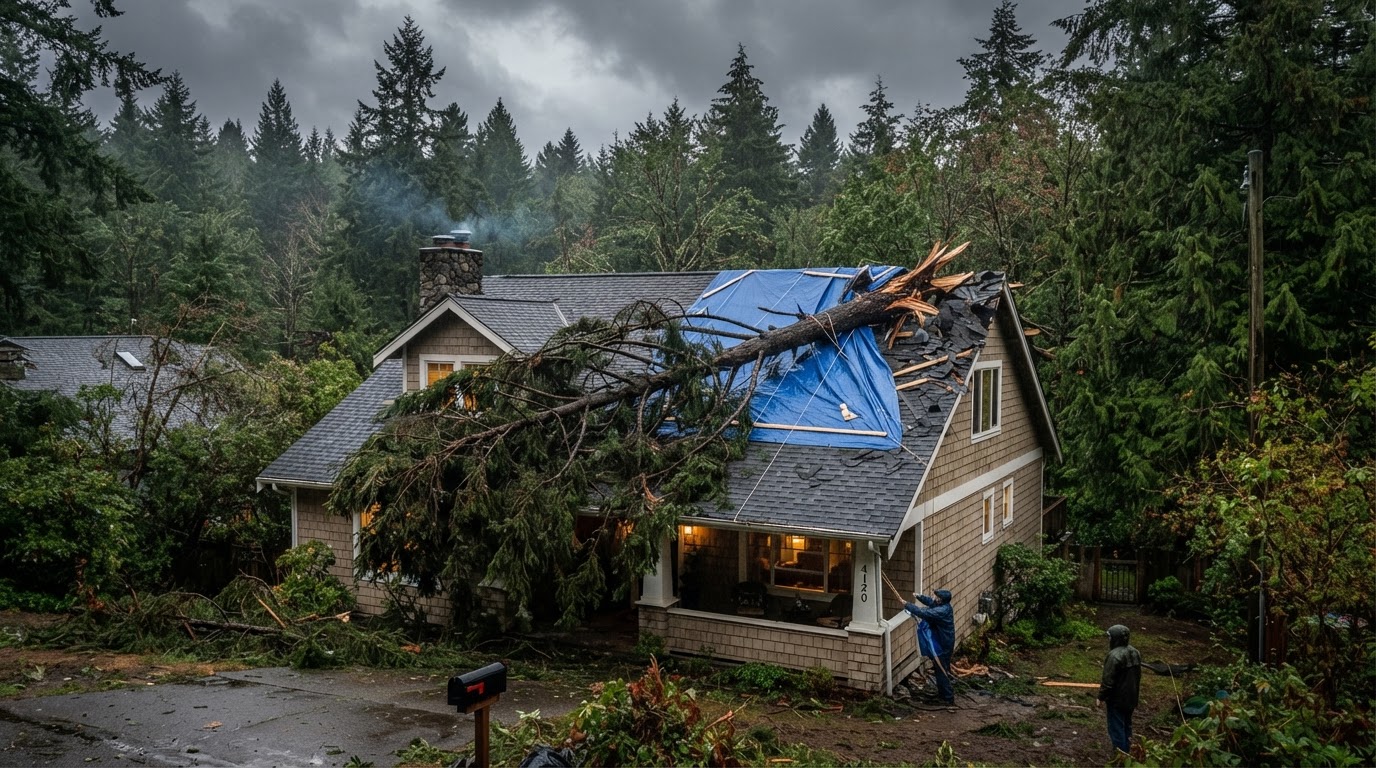
Before anything else, make sure everyone in the home is safe. If a tree has compromised the roof structure — sagging ceilings, cracked walls, or a limb punching through the deck — evacuate the affected rooms or the entire home and call emergency services if needed.
Never climb onto a damaged roof. The deck may be broken or the structure weakened, and a fall is the most common injury in these situations. Leave the roof to professionals with proper fall protection.
Step 2: Stop the Water Intrusion
Every hour a hole in your roof stays open is an hour the next rain can pour water directly into your attic and living space. In the Pacific Northwest, that next rain is rarely far away.
Call for emergency tarping immediately. A properly installed heavy-duty tarp, secured with battens and not just draped, seals the opening against wind-driven rain until a permanent repair can be scheduled. This single step prevents the interior water damage that turns a roof repair into a multi-thousand-dollar remediation job.
Step 3: Document Everything for Insurance
Before any cleanup, photograph the fallen tree, the impact point on the roof, any interior water damage, and the tarp installation — all with timestamps. Most homeowners policies cover tree damage from storms, but they require prompt reporting and documentation.
- Photograph the tree or limb, the roof impact area, and any interior damage with timestamps.
- Save any debris that shows the cause (a storm-damaged branch, for example) if safe to do so.
- Contact your insurance company promptly — delayed reporting can complicate the claim.
- Request a professional, photo-documented inspection report to submit to your adjuster.
- Keep receipts for any emergency tarping or temporary repairs you pay for out of pocket.
Step 4: Professional Assessment and Permanent Repair
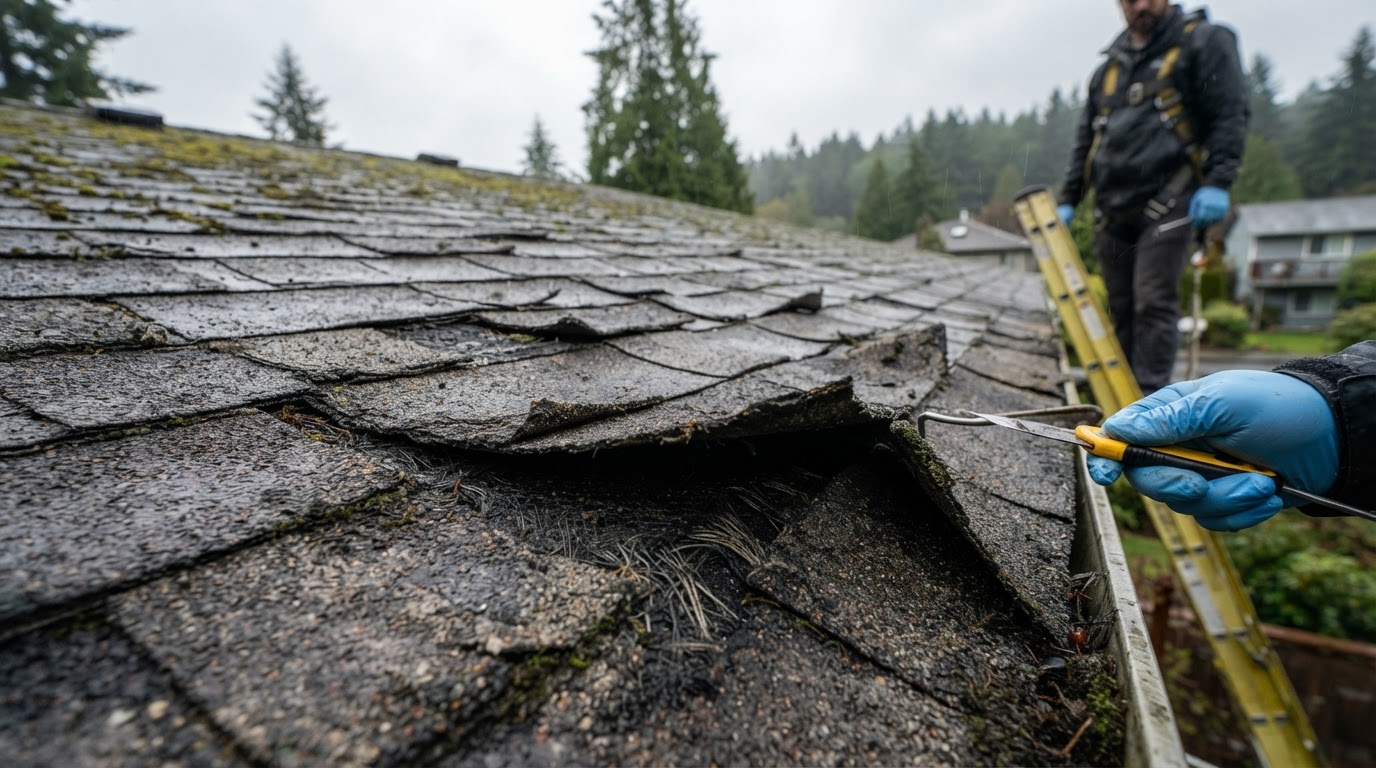
Once the roof is tarped and documented, a professional inspection determines the real extent of the damage. A limb that looks like it only cracked a few shingles may have fractured the deck, bent a rafter, or crushed a flashing — damage that won't show as a leak until the next storm.
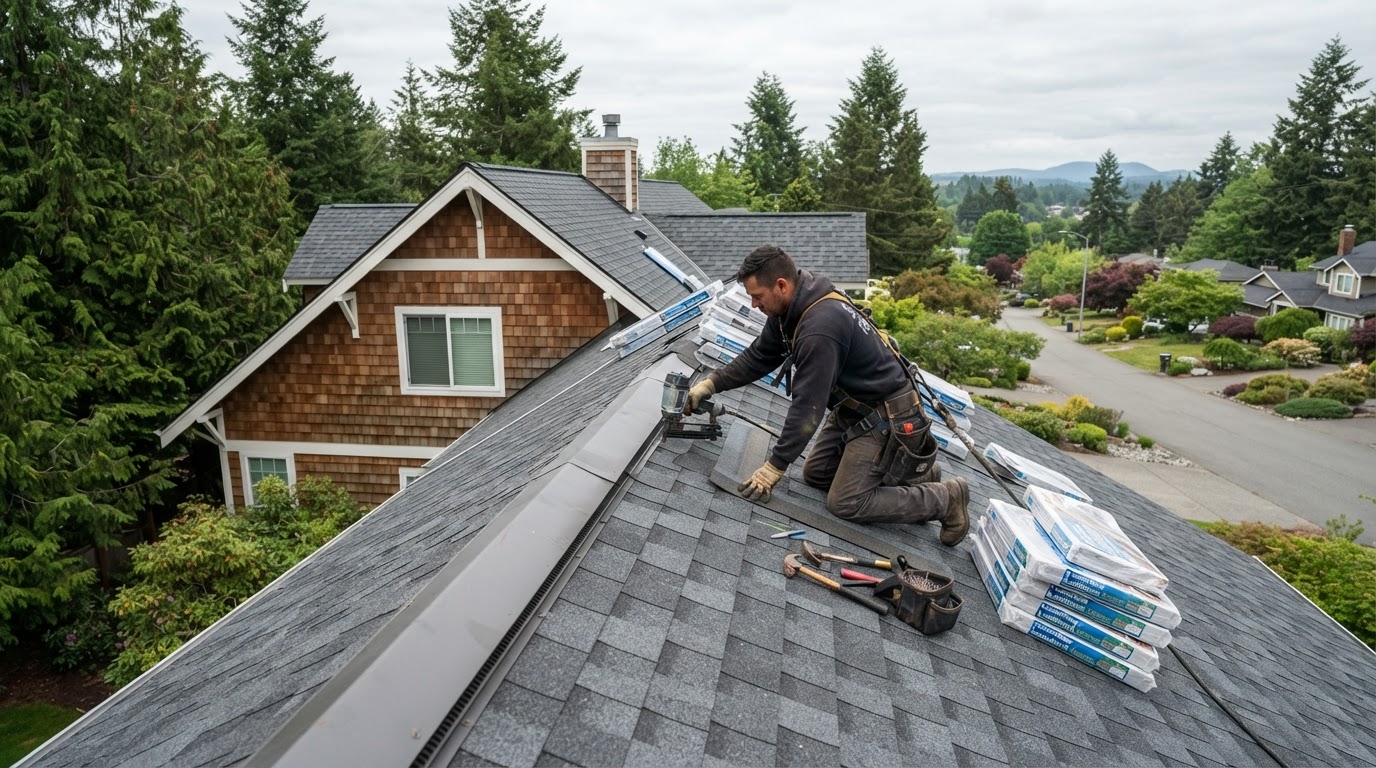
The repair may be as simple as replacing broken shingles and a section of deck, or it may require structural framing work. Either way, the inspection gives your insurer an accurate scope and gives you a written, honest estimate for the permanent fix.