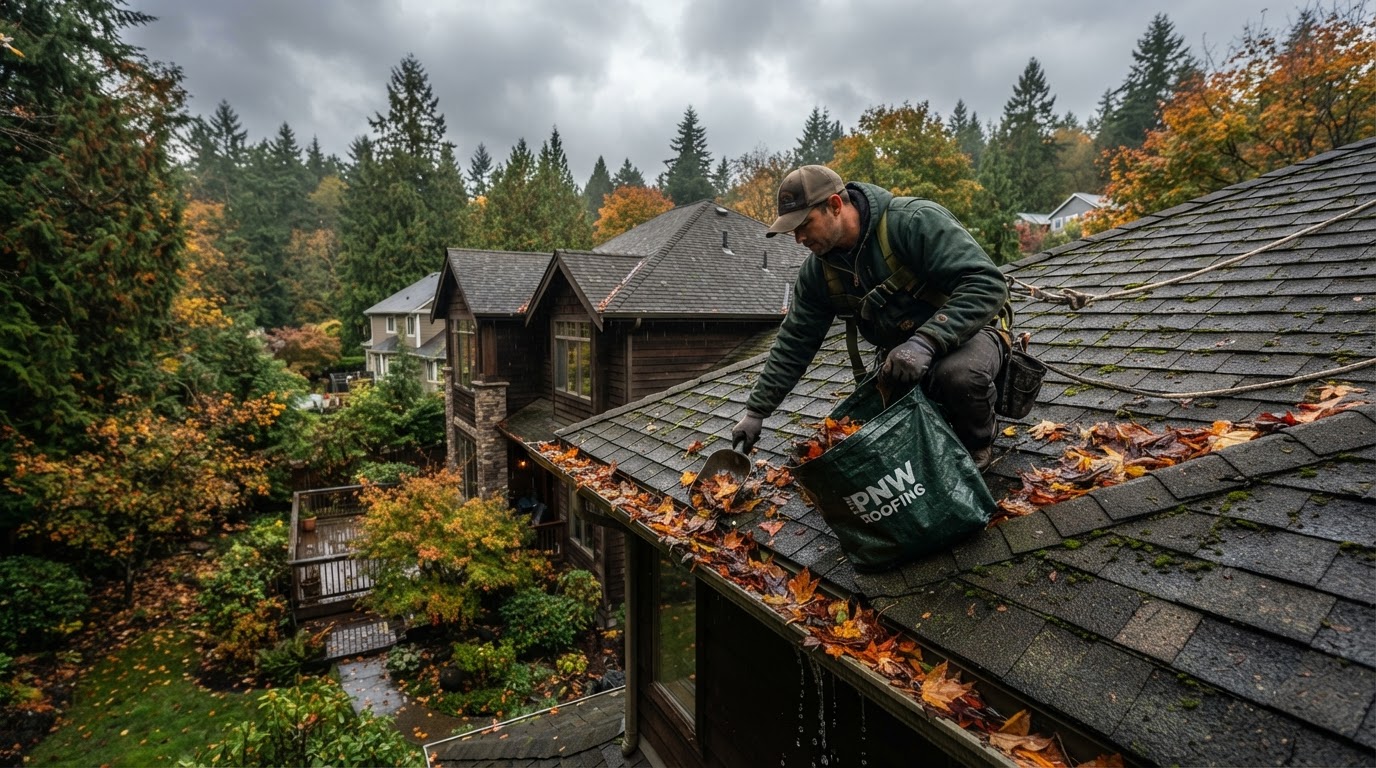
Why Twice a Year in Western Washington
Our climate has two distinct stress seasons. Winter brings atmospheric river storms, wind-driven rain, and the freeze-thaw cycles that lift shingle seal strips. Summer brings dry heat that bakes exposed asphalt and the tree debris that accumulates in valleys and gutters.
A spring inspection catches damage from winter storms before the next wet season. A fall inspection clears debris and treats moss so the roof enters winter clean and shedding water properly. Skipping either window lets small problems compound into leaks.
Spring Checklist: After Storm Season
After a Pacific Northwest winter, focus on what the wind, rain, and freeze-thaw may have loosened:
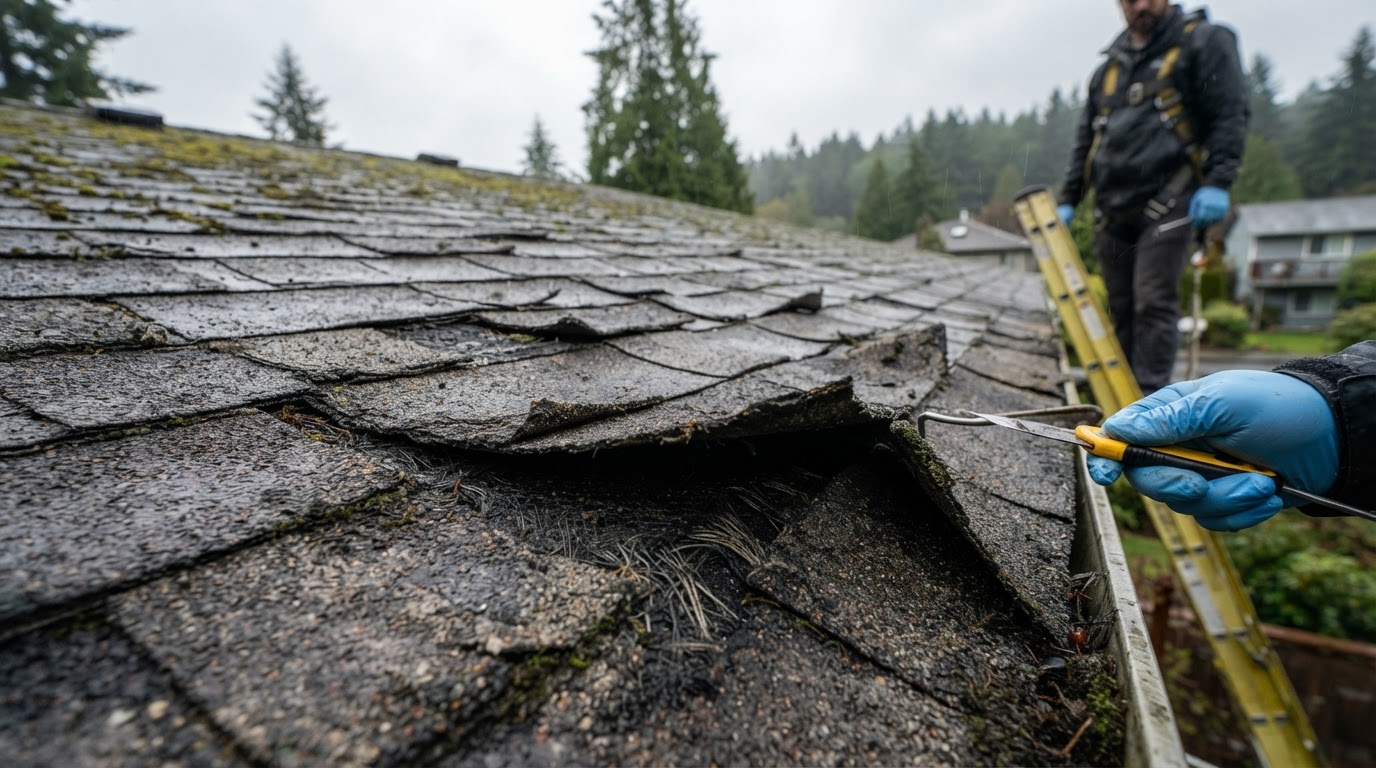
- Inspect shingles for lifted, cracked, or missing pieces — wind uplift breaks the adhesive seal strip.
- Check all flashings (valleys, chimneys, skylights, pipe boots) for lifted metal or cracked sealant.
- Clear winter debris from valleys, gutters, and downspout outlets.
- Look inside the attic for water stains, damp insulation, or daylight through the deck boards.
- Schedule moss treatment if green growth is visible — spring is ideal before summer dry-out.
Fall Checklist: Before the Wet Season
Before the rains return, make sure the roof is ready to shed water cleanly all winter:
- Clear all leaves, pine needles, and fir cones from gutters and valleys — clogs cause overflow that backs up under shingles.
- Verify downspouts are clear and extensions direct water at least 4 feet from the foundation.
- Inspect pipe boots and vent flashings — rubber gaskets crack from UV and split open within 8 to 12 years.
- Check attic ventilation — balanced soffit intake and ridge exhaust prevent condensation that rots the deck from inside.
- Trim back any branches overhanging the roof to reduce debris and moss-friendly shade.
Moss Treatment: The Year-Round Priority
Moss is the single biggest lifespan-killer in the Puget Sound. Its root rhizoids lift shingle edges and break the seal strip, while the moss cushion holds moisture against the surface for days after rain. We measure 30 to 40 percent faster deterioration on moss-covered slopes versus clean ones.
Schedule professional soft-wash treatment every 18 to 24 months for shaded roofs, and every 24 to 30 months for exposed south-facing roofs. Never pressure wash — that strips the protective granules and halves the remaining lifespan in a single afternoon.