Active Roof Damage? 253-354-8081
Serving Tacoma, Seattle & the Puget Sound
253-354-8081
Roof Maintenance•5 min read•Sep 5, 2026

Post-Storm Roof Inspection: What to Check After Wind & Heavy Rain

P
PAC Roofing LLC
Diagnostic Inspectors
Post-Storm Roof Inspection: What to Check After Wind & Heavy Rain
The Short Answer

After a Pacific Northwest windstorm, the damage you can't see from the ground is what causes leaks weeks later. Wind uplift breaks shingle seal strips without removing the shingle, cracked pipe boots and lifted flashings let wind-driven rain straight into the attic, and debris in valleys dams water behind shingles. A professional post-storm inspection checks the high-risk transition zones and the attic interior to catch this hidden damage before the next rain. Documenting storm damage promptly also protects your insurance claim.

60+ mph
Wind gusts common in Puget Sound storms
8–12 yrs
Lifespan of rubber pipe boots before UV cracking
Weeks
Delay before hidden storm damage shows as a leak
Prompt
Documentation timing that protects insurance claims
Key Takeaways for Homeowners
  • Wind uplift breaks shingle seal strips without removing the shingle, causing leaks weeks after the storm.
  • A post-storm inspection checks high-risk transition zones — flashings, pipe boots, valleys — and the attic interior for hidden water intrusion.
  • Documenting storm damage promptly with photos and a professional report protects your insurance claim.

Why Storm Damage Hides at First

The shingles that blow off and land in your yard are the obvious damage. The dangerous damage is what stays on the roof but no longer seals.

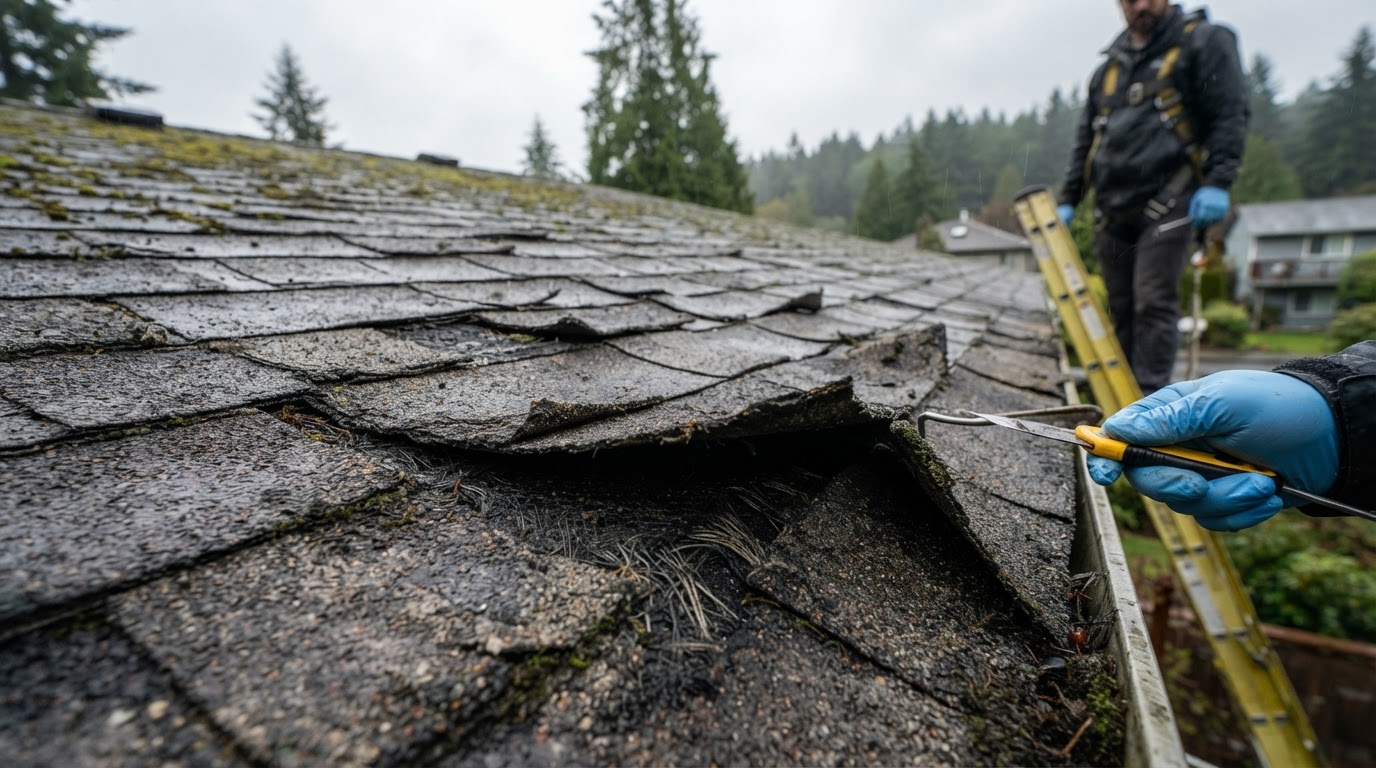
Wind uplift works like a pry bar. As gusts pass over a roof edge, negative pressure lifts the shingle tab and breaks the adhesive seal strip beneath it. The shingle settles back into place looking normal, but the seal is gone — and the next wind-driven rain pushes water straight under it.

This is why a roof can look fine from the ground after a storm and still leak weeks later when the next atmospheric river arrives.

What to Check From the Ground First

Before anyone climbs a ladder, do a safe ground-level walkaround:

  • Scan the yard and gutters for displaced shingles, tabs, or granule piles.
  • Check downspout exits for heavy granule wash — a sign the storm stripped the protective coating.
  • Look for lifted or curled shingle edges visible at the roofline, especially on windward slopes.
  • Inspect the ground around the home for fallen branches that may have impacted the roof.
  • Check ceilings and the attic for any new water stains, damp insulation, or daylight through the deck.

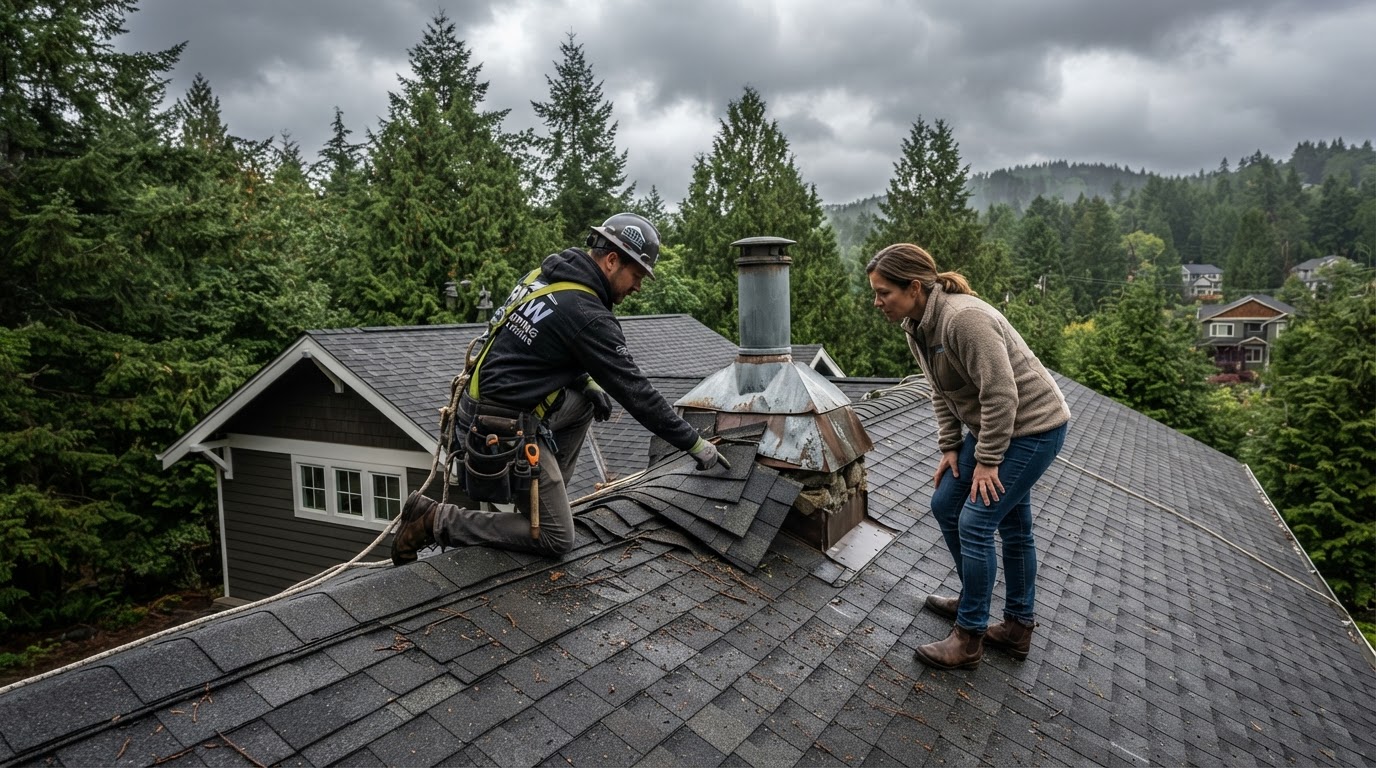
What a Professional Inspection Checks Up Top

A trained inspector focuses on the high-risk transition zones where storm damage concentrates:

  • Shingle seal strips — pressing each tab to confirm the adhesive still bonds; lifted strips mean wind uplift broke the seal.
  • Flashings — valleys, chimneys, skylights, and dormer sidewalls for lifted metal or cracked sealant.
  • Pipe boots — the rubber gasket around plumbing vents cracks from UV within 8 to 12 years and splits in wind.
  • Valleys — debris dams that force water behind shingles, and rusted or lifted valley metal.
  • Attic interior — moisture meters and thermal imaging to find damp insulation and water trails invisible to the eye.

Documenting Damage for Insurance

If a storm caused the damage, document it promptly. Photograph displaced shingles, granule wash, and any interior water stains with timestamps. Most homeowners policies require you to report storm damage within a reasonable window, and delayed reporting can complicate a claim.

A professional inspection report with photos of the high-risk zones strengthens your claim and ensures no hidden damage is missed. We provide written, photo-documented inspections that homeowners can submit directly to their adjuster.
Frequently Asked Questions

Should I inspect my roof after every storm in the Pacific Northwest?

After any storm with wind gusts over 60 mph or heavy wind-driven rain, yes. Wind uplift can break shingle seal strips without removing the shingle, and cracked flashings can let water into the attic invisibly. A ground-level walkaround plus a professional inspection of the high-risk zones catches hidden damage before the next rain causes a leak.

What are the most common types of storm damage to a roof?

The most common are lifted or missing shingles from wind uplift, cracked pipe boots and lifted flashings, debris dams in valleys, and granule loss from hail or heavy rain. The dangerous damage is often invisible from the ground — broken seal strips and failed flashings that leak weeks later when the next storm arrives.

How soon after a storm should I file an insurance claim for roof damage?

Promptly. Most homeowners policies require you to report storm damage within a reasonable window, and delayed reporting can complicate a claim. Photograph displaced shingles, granule wash, and interior water stains with timestamps, and get a professional, photo-documented inspection report to submit to your adjuster.

Can a roof look fine after a storm but still be damaged?

Yes. Wind uplift breaks the adhesive seal strip beneath a shingle without removing it, so the shingle settles back looking normal but no longer seals. The next wind-driven rain pushes water straight under it. This hidden damage is why a professional post-storm inspection checks the seal strips and attic interior, not just the visible surface.

Serving Homeowners Across the Puget Sound

PAC Roofing LLC provides the roofing services described in this guide to homeowners in these Pacific Northwest communities:

Have Questions About Your Roof?

Get straightforward recommendations from local roofing pros.

Schedule a free on-site roof inspection anywhere in Puget Sound.

Call Now253-354-8081