Active Roof Damage? 253-354-8081
Serving Tacoma, Seattle & the Puget Sound
253-354-8081
Gutters & Drainage•4 min read•Aug 15, 2026

Gutters and Roofs: The Integrated Drainage System That Protects Your Foundation

P
PAC Roofing LLC
Gutter Installation Lead
Gutters and Roofs: The Integrated Drainage System That Protects Your Foundation
The Short Answer

Your roof and gutters are two halves of one drainage system. A pristine shingle roof does little good if the rainfall washing down its slopes backs up at the eaves. Standard 5-inch sectional gutters frequently overflow during Pacific Northwest atmospheric river storms, wicking water behind fascia boards and eroding foundations. Seamless 6-inch heavy-gauge aluminum gutters carry roughly 40% more water volume, eliminate leaky seams, and route rainwater safely away from the home with oversized 3x4-inch downspouts.

40% more
Water volume carried by 6-inch vs 5-inch gutters
5-inch
Standard gutter width that overflows in atmospheric rivers
3x4-inch
Recommended downspout size for Puget Sound homes
0 seams
Leak points in seamless on-site fabricated gutters
Key Takeaways for Homeowners
  • Standard 5-inch sectional gutters frequently overflow during Pacific Northwest atmospheric river storms.
  • Continuous seamless 6-inch heavy-gauge aluminum gutters carry 40% more volume and eliminate leaky seams.
  • Drip edge flashing must properly overhang into the gutter trough to prevent capillary water from rotting fascia boards.

Your Roof and Gutters Are One System

Your roof and gutters are two halves of one drainage system. A pristine architectural shingle roof does little good if the gallons of rainfall washing down its slopes back up at the eaves.

When the drainage half fails, the roof half fails with it. Water that overflows a gutter has nowhere to go but behind the fascia board and up under the lower shingle courses — the exact spot where ice-and-water shield ends and the roof is most vulnerable.

Why Standard 5-Inch Gutters Fail in Atmospheric Rivers

During our notorious Pacific Northwest atmospheric river storms, standard 5-inch sectional gutters struggle to handle the torrential volume. Pine needles and fir cones quickly clog narrow drop outlets, causing gutters to overflow.

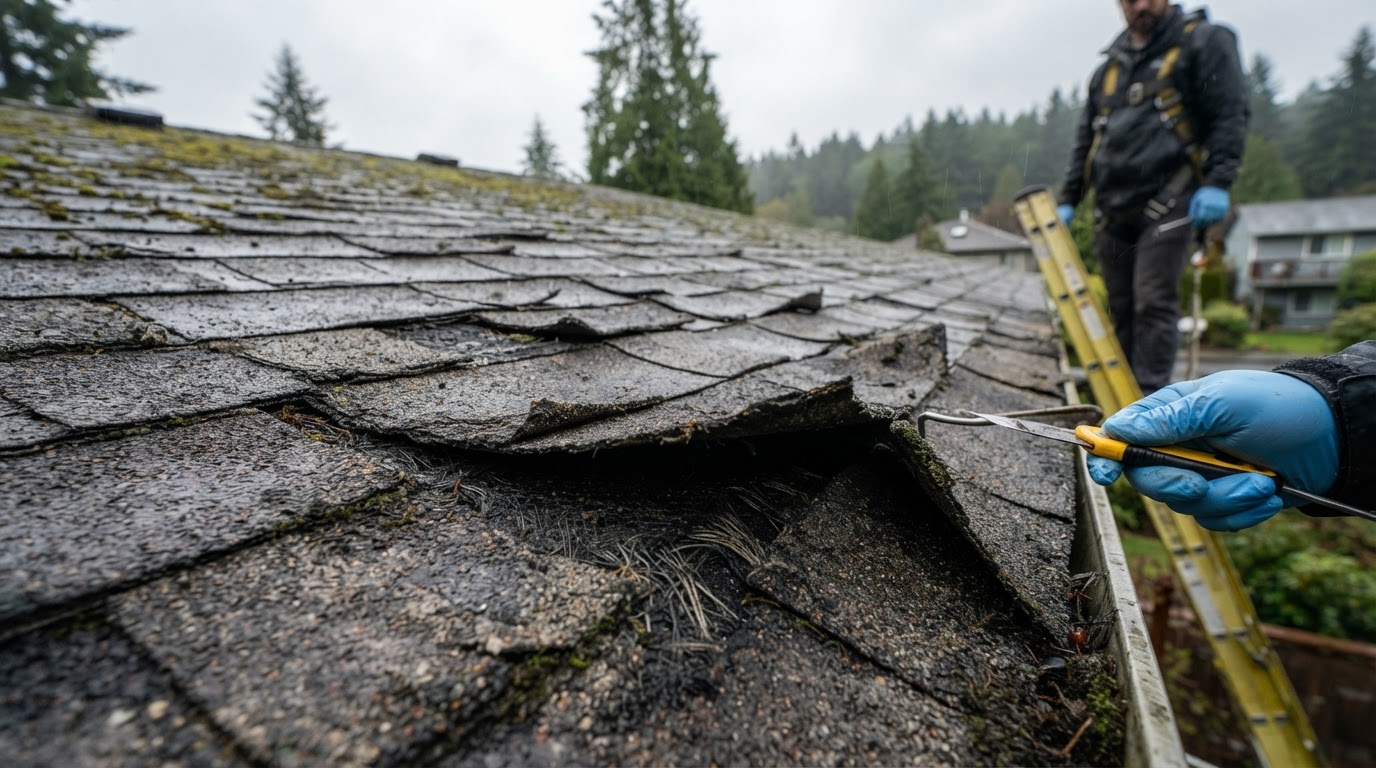
When gutters back up, water pools beneath lower shingles, rotting the roof deck edge and soaking fascia trim. The damage is gradual and hidden — by the time the fascia is soft enough to notice, the roof edge and deck have been wet for months.

The Seamless 6-Inch Solution

We recommend seamless 6-inch K-style aluminum gutters fabricated on-site to match the exact length of your eaves. The upgrade solves the three problems that cause most gutter failures in Western Washington:

  • Capacity — 6-inch gutters carry roughly 40% more water than 5-inch, enough to stay ahead of atmospheric river downpours.
  • Seamless construction — fabricated in one continuous run per eave, eliminating the joints that pull apart, freeze-split, and leak.
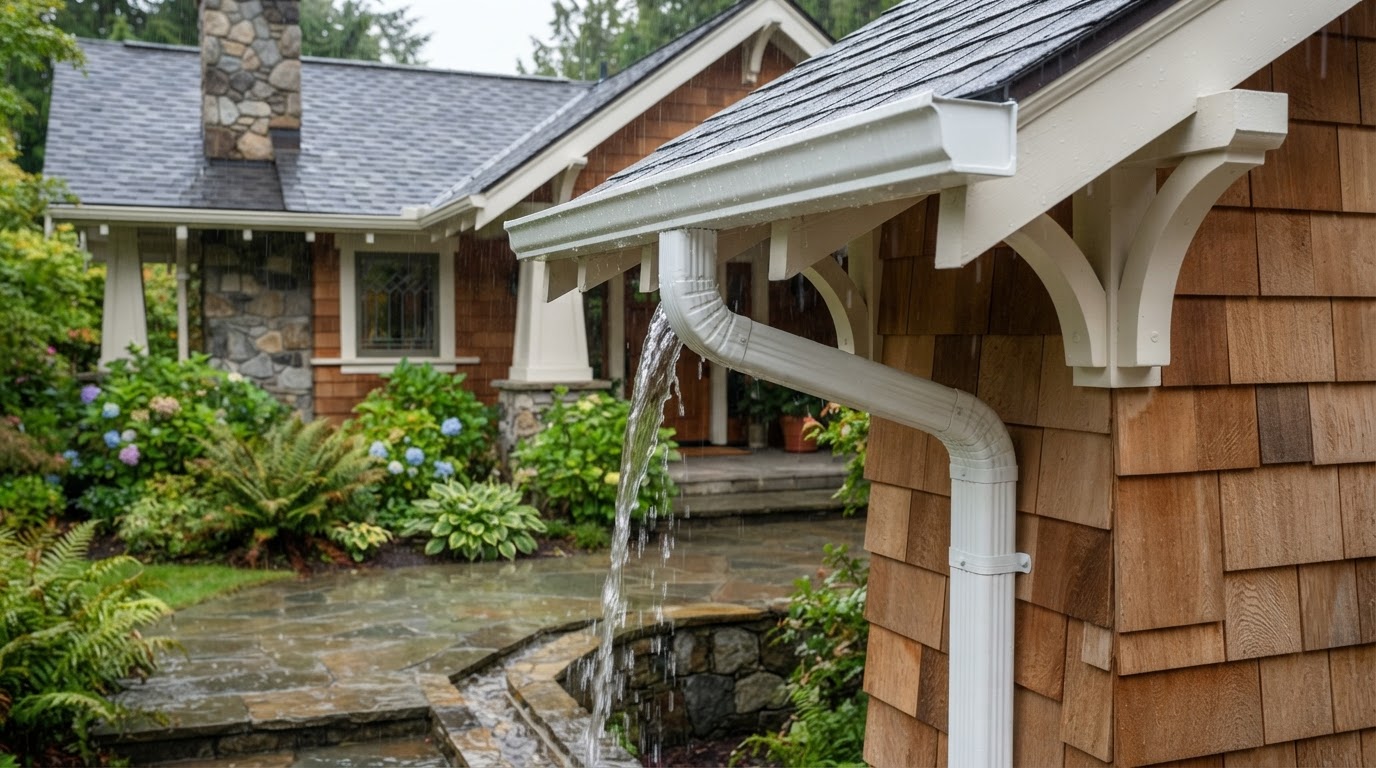
  • Oversized downspouts — 3x4-inch downspouts move water away from the foundation fast instead of backing up at the outlet.

Drip Edge: The Missing Link Between Roof and Gutter

Drip edge flashing must properly overhang into the gutter trough to prevent capillary water from running behind the gutter and rotting the fascia board. Many older Puget Sound homes were built without drip edge, or with it installed incorrectly tucked under the felt.

When we install or replace gutters, we verify the drip edge extends past the back of the gutter so water drops cleanly into the trough rather than wicking back up under the shingle and down the fascia. It is a small detail that prevents the most common cause of fascia rot.

Warning Signs Your Drainage System Is Failing

If you notice any of these, your roof-and-gutter drainage system is waving a red flag:

  • Water cascading over gutter rims during heavy rain — the gutter is undersized or clogged.
  • Dark stains or green algae on the fascia board behind the gutter — water is running behind, not into, the trough.
  • Erosion or washed-out mulch directly below the eaves — downspouts are dumping water too close to the foundation.
  • Sagging or pulling gutters — the hangers have failed, often from the weight of standing water and debris.
Frequently Asked Questions

What size gutters are best for homes in the Pacific Northwest?

Seamless 6-inch K-style aluminum gutters are the dependable choice for Puget Sound homes. They carry roughly 40 percent more water than standard 5-inch gutters, which frequently overflow during atmospheric river storms, and they are fabricated in one continuous run per eave to eliminate leaky seams.

Why do my gutters overflow during heavy rain?

Overflow usually means the gutters are undersized (5-inch instead of 6-inch), clogged with pine needles and fir cones at the drop outlets, or both. In Western Washington's atmospheric river storms, standard 5-inch gutters simply cannot move the volume fast enough, and water backs up under the shingles.

What is drip edge flashing and why does it matter?

Drip edge is the metal flashing installed at the roof edge that directs water into the gutter trough instead of behind it. Without proper drip edge overhang, water wicks back up under the shingles and down the fascia board, causing the fascia and roof deck edge to rot — the most common cause of fascia damage.

Can bad gutters really damage my home's foundation?

Yes. Gutters and downspouts that overflow or dump water too close to the foundation allow water to pool against the footing, which can erode soil, seep into the basement or crawlspace, and stress the foundation wall. Oversized 3x4-inch downspouts and proper extensions route water safely away.

Serving Homeowners Across the Puget Sound

PAC Roofing LLC provides the roofing services described in this guide to homeowners in these Pacific Northwest communities:

Have Questions About Your Roof?

Get straightforward recommendations from local roofing pros.

Schedule a free on-site roof inspection anywhere in Puget Sound.

Call Now253-354-8081